Web SEO · June 10, 2026 · 2 min read
Optimix: AI-Powered SEO Analyzer
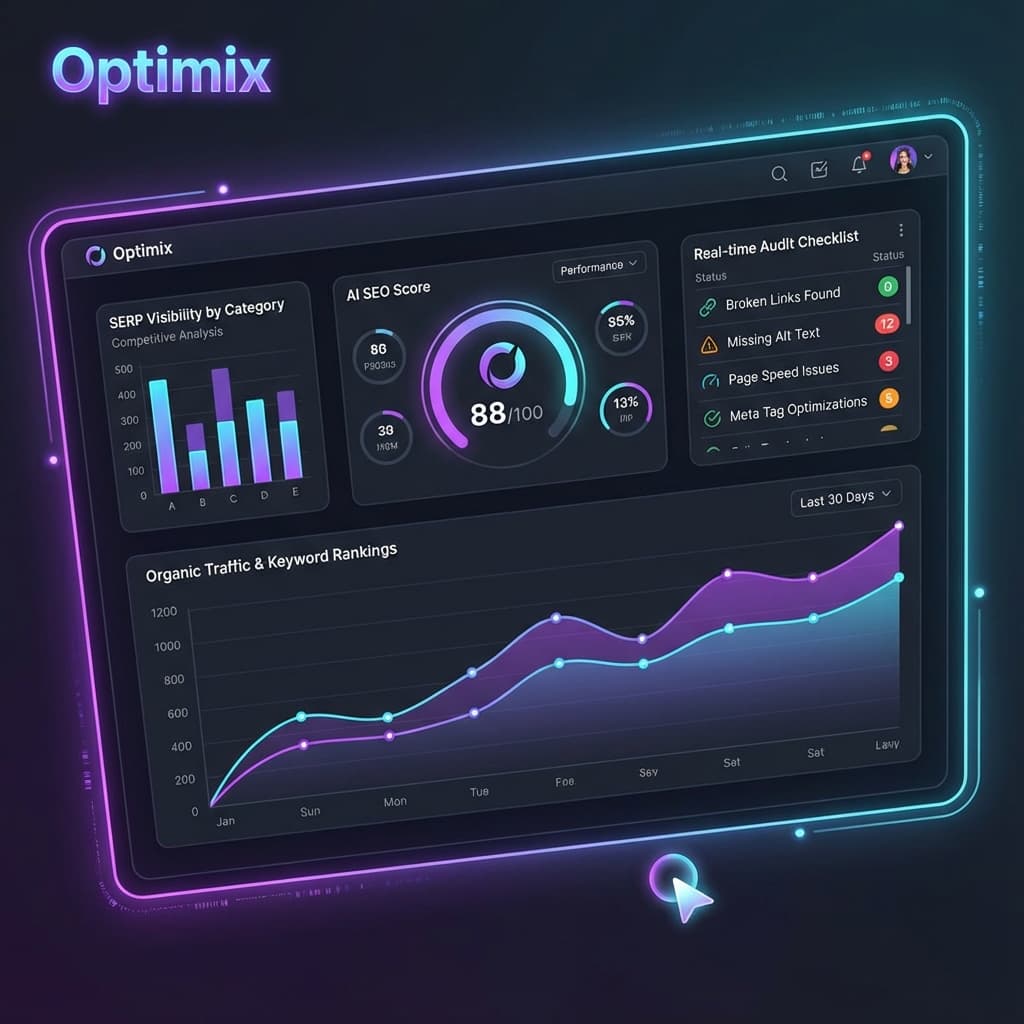
Why I Built My Own SEO Tool
SEO is the lifeblood of any web product, but most audit tools are either too generic or prohibitively expensive for solo developers. They hand you a list of checkboxes—"missing alt tags," "slow LCP"—without any real context about why it matters or what to actually fix first.
I built Optimix because I needed a tool that goes beyond surface-level checks. One that runs real analysis on page structure, meta data, and content quality, then gives you a prioritized list of fixes ordered by impact—not alphabetical order.
The Core Features
- Semantic Analysis: Optimix checks heading hierarchy, semantic HTML structure, and content flow to ensure your page is logically organized for search bots.
- Real-Time Crawling: A lightweight crawler that simulates how Googlebot sees your site, immediately flagging blocking issues like missing canonicals, broken links, or incorrect robots directives.
- Meta & Tag Auditing: Full inspection of title tags, meta descriptions, Open Graph tags, and structured data—everything that affects how your pages appear in search results.
- Checklist Engine: Generates a prioritized list of fixes, from critical (missing canonical tags, duplicate titles) to minor (image compression, trailing slashes).
- Content Quality Scoring: Uses AI to evaluate your page content for thin copy, keyword stuffing, and readability—giving you clear feedback on what to rewrite.
Technical Implementation
Optimix is built on the Next.js framework for its performance and server-side rendering capabilities. The analysis engine uses an AI model for content evaluation, catching issues like thin content or poor keyword density that traditional regex-based checkers completely miss.
- Frontend: Next.js + Tailwind CSS + Shadcn UI
- Logic: TypeScript
- Deployment: Vercel
The crawler runs server-side on each analysis request, fetching the raw HTML just like a search engine would—no JavaScript execution, no client-side rendering tricks. What you see is what Google sees.
The Result
Building Optimix gave me a tool I actually use before shipping any page. The first audit I ran on my own portfolio caught that my sitemap.xml was out of sync and several blog pages were missing canonical tags entirely. Fixing those two things made an immediate difference in how my pages were being indexed.
It is a live project at optimix.malahim.dev that I use to validate every site I ship.